Hae
Aineistot 1-10 / 28
Vascular adhesion protein-1, its ligands and role in cardiovascular disease prediction
(Turun yliopisto, 2018-09-21)
To study the pathogenesis and prevention of diseases, population studies in which hundreds of measurements are done from the same persons have a crucial role. A biomarker is any measurable characteristic that gives information ...

Serum proteomics to detect early changes in type 1 diabetes and carotid atherosclerosis
(Turun yliopisto, 2018-10-10)
The detection of early markers is the key issue in predicting the outcome of inflammatory diseases such as type 1 diabetes and atherosclerosis. Whilst biochemical testing approaches have improved prediction of inflammatory ...
PLVAP as the gatekeeper of endothelial cell permeability and leukocyte migration
(Turun yliopisto, 2019-10-11)
Endothelial cells (EC) line the lymphatic and vascular vessels of the body, forming a barrier between the lumen and surrounding tissue. ECs actively coordinate the exchange of migrating cells, fluids and molecules thus ...
Studies on the pathogenesis and laboratory diagnosis of Lyme borreliosis
(Turun yliopisto, 2019-01-18)
Lyme borreliosis, the most common tick-borne disease in the northern hemisphere, is caused by Borrelia burgdorferi sensu lato spirochetes (later Borrelia). They can infect humans through bites of infected Ixodes ticks. If ...
Novel regulators of T helper cell differentiation con-tribute to autoimmune inflammation
(Turun yliopisto, 2018-09-14)
T helper cells are critical components of adaptive immune system contributing to self/ nonself-recognition, pathogen elimination and pathogenesis of immune-associated diseases.
Understanding the underlying mechanisms ...
Studies on the pathogenesis and historical seroprevalence of Lyme borreliosis in Finland
(Turun yliopisto, 2020-03-13)
Lyme borreliosis (LB) is a common tick-borne infectious disease in the Northern Hemisphere. The LB causing Borrelia burgdorferi sensu lato (Borrelia) spirochetes enter the human host via the tick bite. From the initial ...
Role of cancerous inhibitor of protein phosphatase 2A in the regulation of T-cell response
(Turun yliopisto, 2021-12-03)
T helper (Th) cell subsets with distinct functions are a critical component of the adaptive immune system. Th17 cells secrete interleukin 17 (IL-17) and provide host defense against pathogens. However, dysregulated Th17 ...

Lyme borreliosis in Finland : studies on environmental exposure, disease susceptibility and epidemiology
(Turun yliopisto, 2017-10-13)
Lyme borreliosis is the most common tick-borne infectious disease in Europe and North America. It is caused by the spirochetes belonging to the Borrelia burgdorferi sensu latocomplex. The bacteria are transmitted to humans ...
Intestinal permeability in pregnancy : dietary and microbial determinants and metabolic consequences
(Turun yliopisto, 2017-11-10)
Metabolic disorders during pregnancy may challenge the mother and child to longterm health complications. Emerging data indicates a link between increased intestinal permeability and metabolic risk markers in a non-pregnant ...
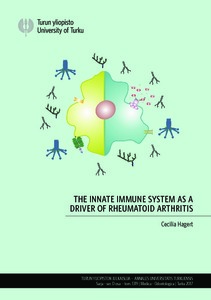
Innate immune system as the driver of Rheumatoid Arthritis
(Turun yliopisto, 2017-12-02)
Rheumatoid arthritis (RA) is a chronic, inflammatory, autoimmune disease traditionally believed to be driven primarily by the adaptive immune cells. However, a large infiltrate of innate cells can be seen in the inflamed ...